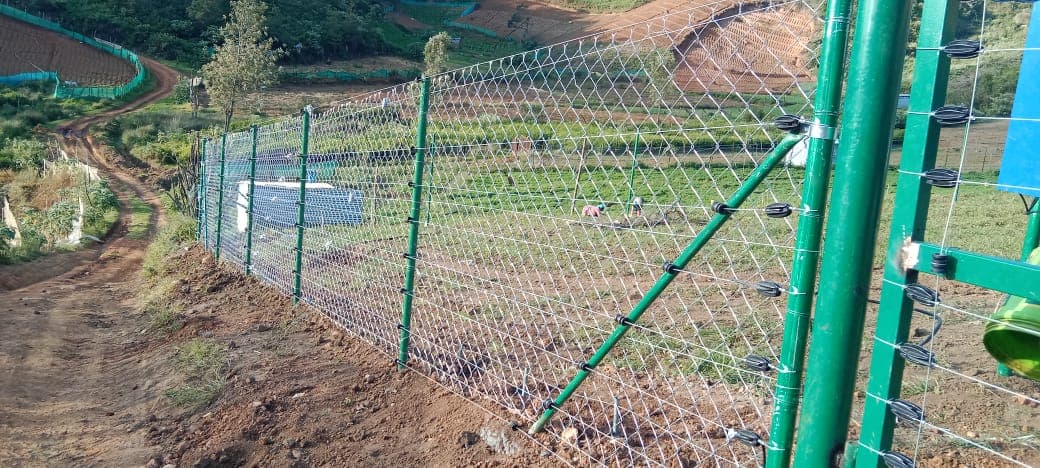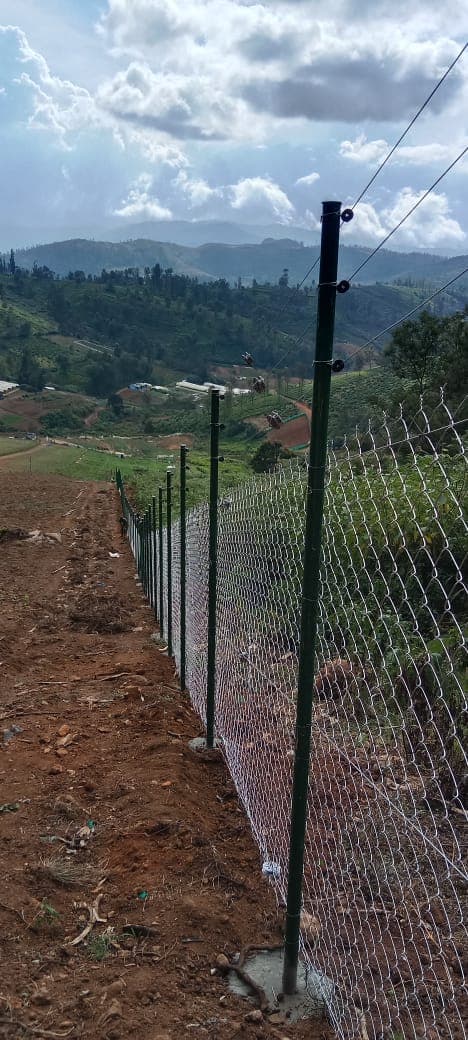
A solar fence rarely fails outright. What happens is that it quietly weakens — the pulse is still there, the light still flashes, and one morning something walks through it. Almost every call we get about a "dead" fence turns out to be one of the causes below, in roughly this order of frequency. Work through them in order and you will find it.
First: get an actual number
You cannot troubleshoot a fence by feel or by looking at a neon lamp. Take a reading at the energizer terminal, then at the far end of the line. Two numbers tell you almost everything: if output at the unit is healthy but the far end is weak, you have a leak somewhere in between. If output at the unit is already low, the problem is power, earthing or the energizer itself — and you can stop walking the line.
A digital volt meter gives you kV to compare against. A neon tester grades the line Excellent to Very Poor, which is enough for a daily check and is the tool to leave with farm staff.
The six usual causes
1. Vegetation touching the wires
By a wide margin the most common cause, and it is seasonal — fences that were fine in February start failing in June. Grass and creeper growth against a live wire bleeds voltage to ground continuously. A single stem does little; a hundred metres of grass leaning on the bottom line will flatten the whole fence. Walk the line and clear it. If a particular stretch grows back every few weeks, that stretch needs a wider cleared strip, not more energizer.
2. Cracked or aged insulators
This is where cheap hardware shows up. A UV-degraded insulator cracks, the wire settles against the steel post, and the line is now earthed through the post. Look for scorch marks or a fine black track on the insulator — that is the giveaway. Check corners and strain points first: they carry the most tension and fail first.
3. Poor earthing
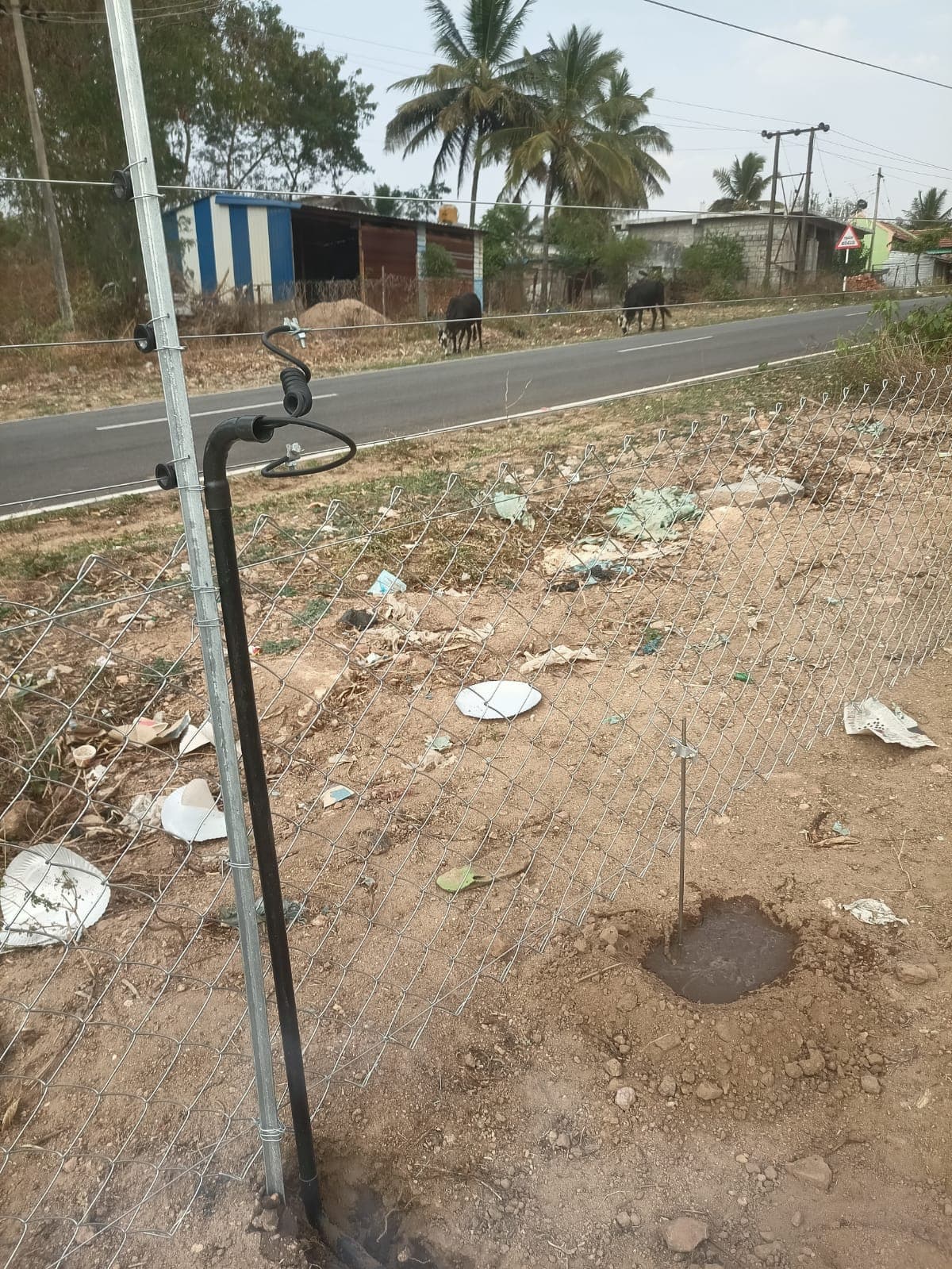
An electric fence completes its circuit through the soil. If the earth stake is short, corroded, or sitting in ground that has dried out, the fence cannot deliver a proper shock no matter how good the energizer is. Dry-season voltage complaints are very often earthing complaints. More earth stakes, spaced apart and driven deeper, in the dampest ground you have.
4. A dirty or shaded solar panel
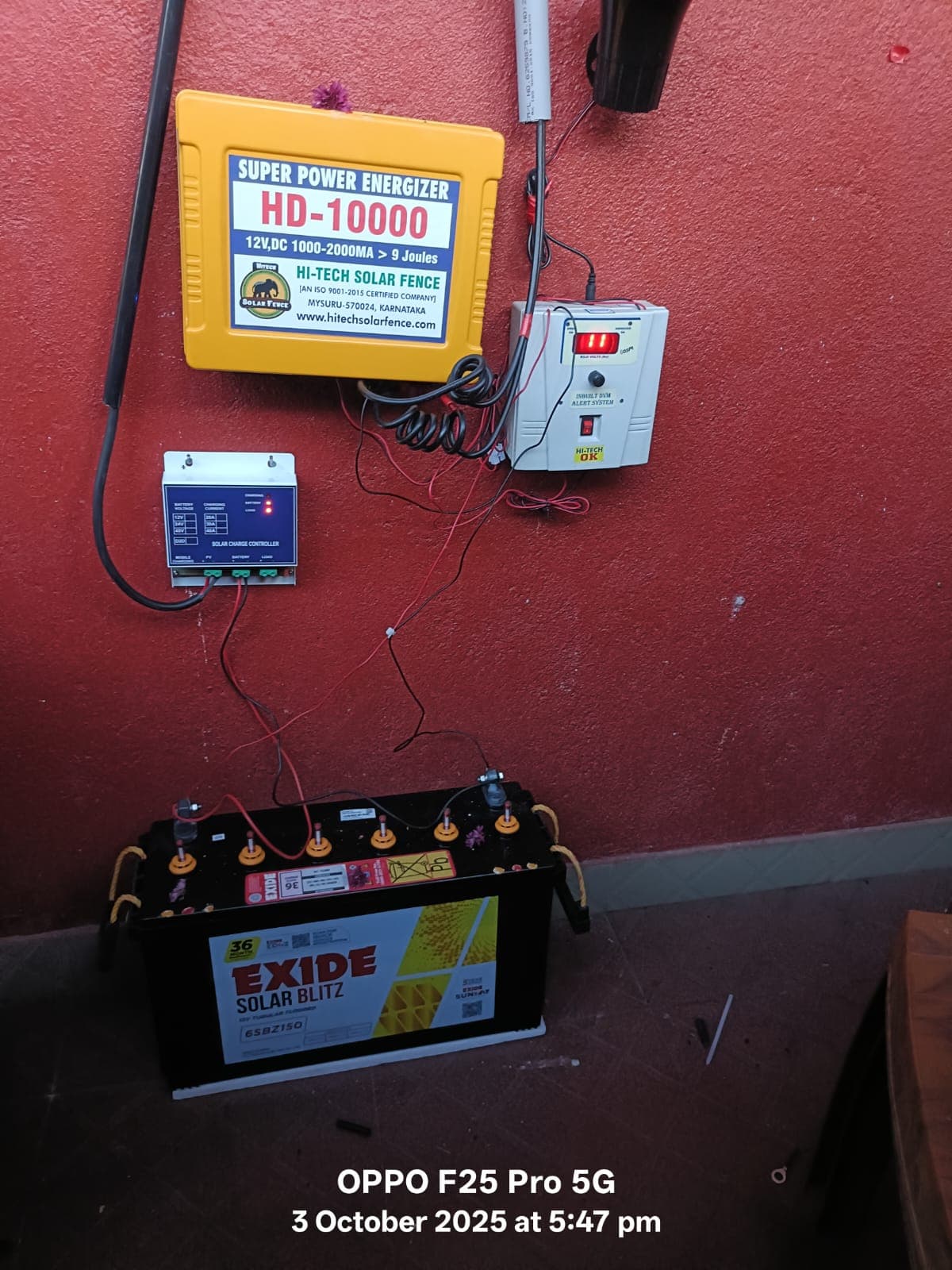
Dust, bird droppings and a season of tree growth all reduce charge. The fence then runs down the battery overnight and never fully recovers. Clean the panel, and check whether something has grown into its sun path since it was installed — panels are usually mounted once and never looked at again.
5. A tired battery
A battery near the end of its life holds enough charge to look fine at midday and nothing by 3 a.m. — which is exactly when the fence is needed. If your fence tests well in the afternoon and animals are still getting in overnight, suspect the battery before anything else.
6. A genuine break or short
A fallen branch, a snapped wire, a gate handle left hooked to a post. To locate it, disconnect the line at a midpoint and test each half: whichever half is weak contains the fault. Halve that half. Four or five splits will find a fault on a kilometre of fence far faster than walking the whole line looking at it.
How to stop diagnosing this every season
- Take a reading on the same day each month and write it down. A slow decline is visible in the numbers months before it is visible in the crop.
- Fit a fence alert system — a hooter on a voltage trip tells you the moment the line drops, instead of the next morning.
- On remote blocks, a GSM unit sends the alert to your phone wherever you are.
- Clear vegetation before the monsoon, not during it.
Common questions
- What voltage should a healthy solar fence read?
- Compare against what your fence read when it was commissioned rather than against a universal figure — the right number depends on the energizer, the number of lines and the length. That is why taking a baseline reading at handover matters: it makes every later reading meaningful.
- Why does my fence work in the day and fail at night?
- Almost always the battery or the panel. During the day the panel supplies the energizer directly and masks a battery that no longer holds charge; after dark the system runs on stored charge and the weakness shows. Check the panel for dust and shade first, then the battery.
- Do you service fences installed by other companies?
- Yes. We will inspect it, tell you honestly what is wrong, and quote for the repair or upgrade — including where the right answer is a component fix rather than a new system.