This is the first question almost everyone asks, and most fencing websites dodge it. We are not going to publish a rate per running foot, because any company that does is either quoting for a fence that will not suit your land or planning to revise the number once they have seen it. What we can do — which is more useful — is tell you exactly what moves the price, so you can read any quotation you receive, including ours, and know whether it is honest.
The six things that set the number
1. Perimeter length, not area
A fence is priced by the boundary you enclose, not by the acres inside it. This catches people out: a long, thin 5-acre strip can cost meaningfully more to fence than a square 8-acre block, because the strip has more boundary. Before you call anyone, walk your boundary or measure it on a satellite map. If you know your running length, every quotation you get becomes comparable.
2. How many lines the fence needs
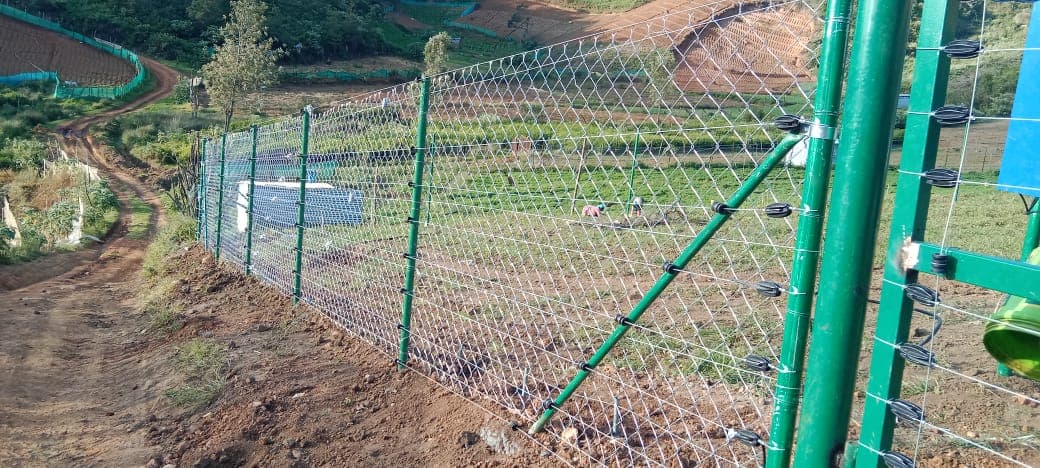
The animal you are stopping decides this. Wild boar push low and need lines close to the ground. Elephants need height and spacing that respects the trunk. Deer jump. A boar fence and an elephant fence on the same 1 km boundary are different quantities of wire, insulators and labour, and therefore different prices. Anyone quoting you before asking what is raiding your crop is guessing.
3. Terrain
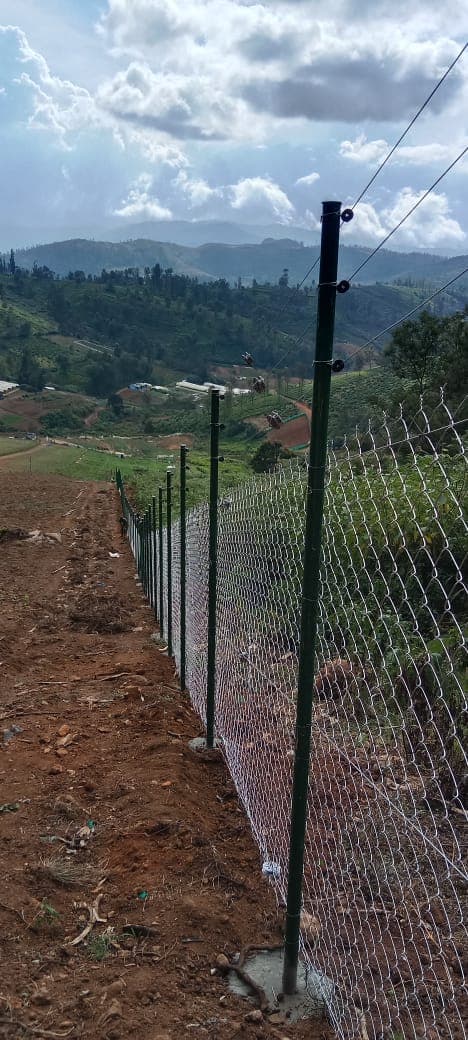
Flat irrigated land is the cheapest thing to fence. Malnad slopes, stream crossings and rocky ground are not — post holes take longer, the line needs more straining points, and crews cover less ground per day. A Kodagu estate perimeter and a Mandya field boundary of identical length are simply different jobs.
4. Post type
GI angle posts, stone posts or a mix. Stone posts cost more on day one and then cost nothing for twenty years — they do not rot, rust or need painting. On farm boundaries we usually recommend them for exactly that reason. On a short villa wall-top run they would be pointless.
5. Energizer size
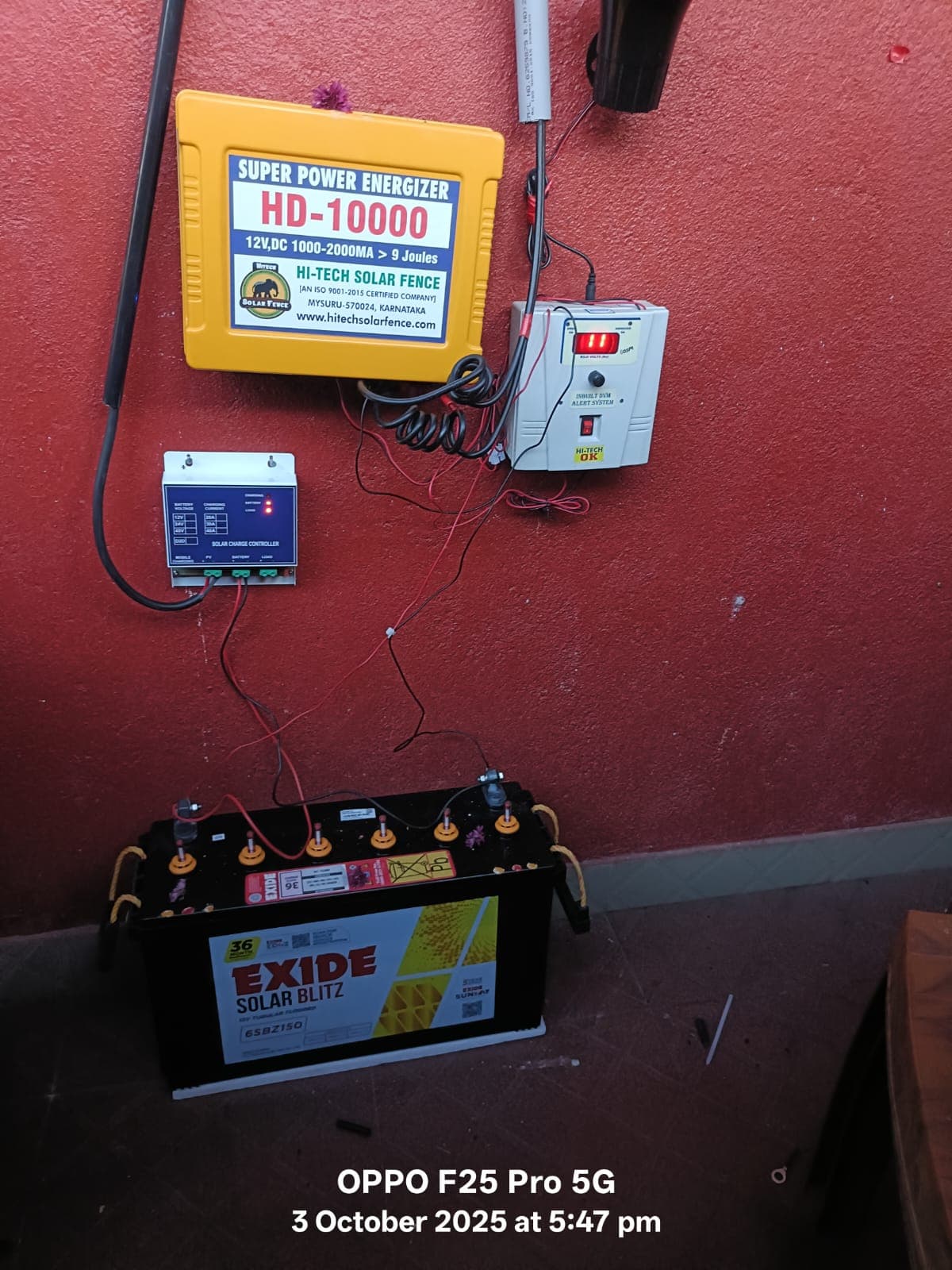
The energizer is sized to total wire length, not perimeter length — a four-line 1 km fence is 4 km of wire. Undersizing it is the single most common false economy in this trade: the fence exists, it looks right, and it does not hold enough voltage to stop anything once vegetation touches the lines.
| Model | Stored energy | Typically suits |
|---|---|---|
| HD-2000 | > 3 J | Small plots, gardens, short boundaries |
| HD-4000 | > 3.5 J | Farm and small-estate perimeters |
| HD-6000 | > 5 J | Larger farms, multi-line estate fences |
| HD-8000 | > 7 J | Large estates, industrial boundaries |
| HD-10000 | > 9 J | Very long perimeters, up to ~2 km multi-wire |
6. Monitoring and extras
A DVM alert system with a hooter, or a GSM unit that texts you when the line is cut, adds cost. On a farm you visit daily, it may be unnecessary. On a remote estate block or an industrial perimeter where the alternative is a night watchman, it pays for itself quickly. Gate kits, warning signage and live lights are small line items but they should appear on the quotation rather than turning up as extras later.
Where people overspend
- Buying more energizer than the boundary needs. An HD-10000 on a two-acre plot is money spent on capacity you will never use. Size it to the wire length.
- Fencing the whole boundary when one side is the problem. If everything comes in from the forest edge, start there. You can extend a well-designed fence later; you cannot un-spend the money.
- Paying for monitoring on a boundary you already walk every morning. Alerting earns its keep on land you are not standing on.
Where cutting cost ruins the fence
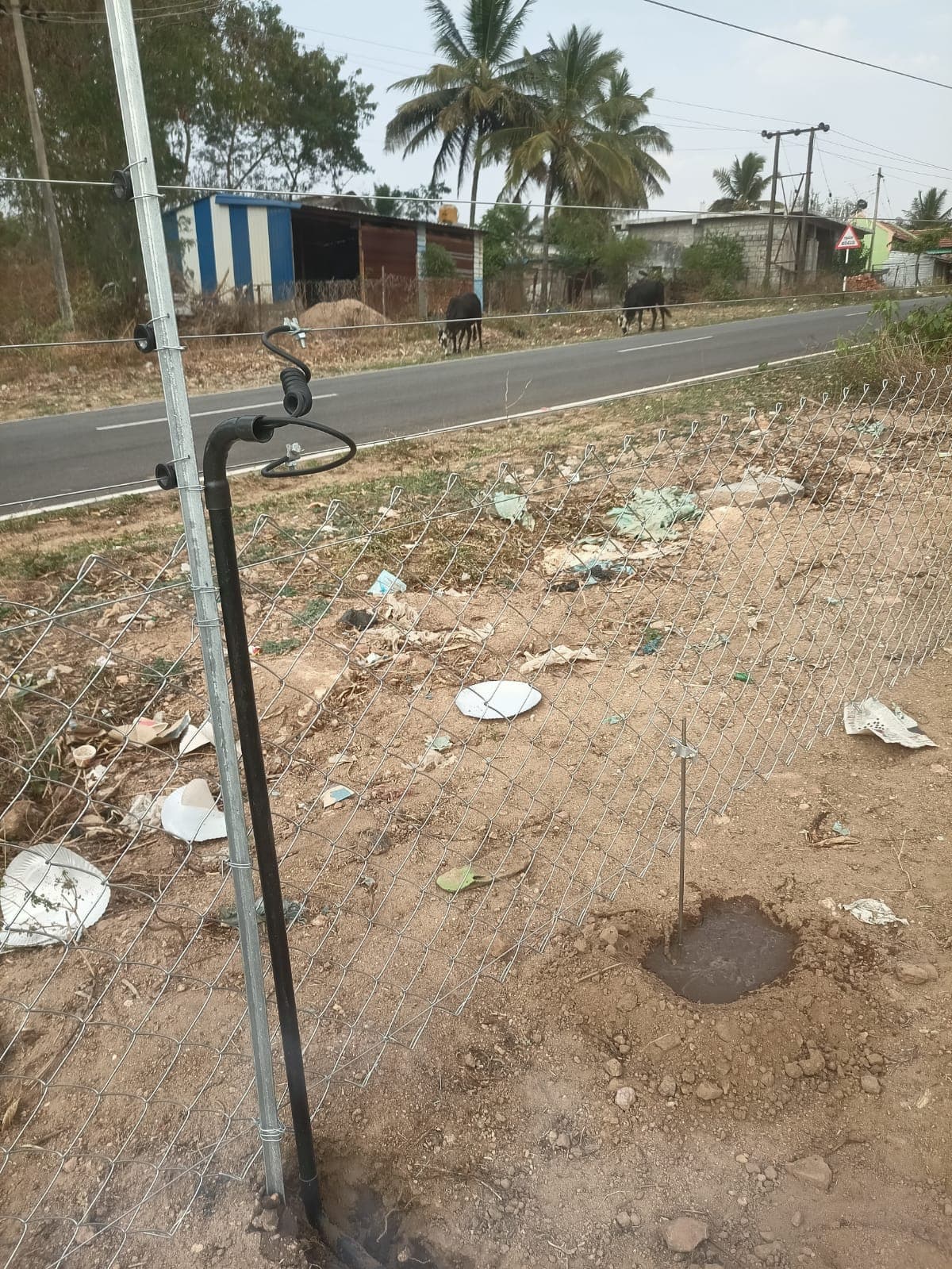
- Soft-plastic insulators. They look identical on day one. They crack in their second summer, the wire touches the post, and the whole line leaks voltage. Ours are moulded from UV-stable polymer and stamped HI-TECH MYSORE — the stamp is how you tell.
- Under-gauge wire and thin galvanising. It rusts, it snaps, and every repair is a site visit.
- Skipping earthing. An electric fence works through the ground. Inadequate earthing is invisible in the quotation and fatal to performance, especially in dry soil.
- No warning signage. Beyond the legal position, signage is what makes the fence a deterrent rather than a surprise.
What to ask for in a quotation
- 1An itemised BOQ — energizer model, number of lines, post type and spacing, insulator type, earthing arrangement, signage.
- 2The running length the quote is based on, so you can check it against your own measurement.
- 3What the warranty covers and for how long.
- 4Who services it, and how long a call-out takes to reach you.
Common questions
- Is solar fencing cheaper than a compound wall?
- Substantially, over any distance. A wall is priced per running foot of masonry; a solar fence is posts, wire and one energizer. For farm and estate boundaries the difference is not close. For a short villa boundary where you want privacy as well as security, a wall with a fence line on top is often the right combination.
- What are the running costs after installation?
- Very little. The system runs on solar, so there is no electricity bill. The recurring costs are a replacement battery every few years, occasional insulator replacement, and keeping vegetation off the lines — which is labour you are already spending on the boundary.
- Do you charge for the site visit?
- No. The site survey and the quotation that follows it are free, anywhere in our Karnataka service area.